

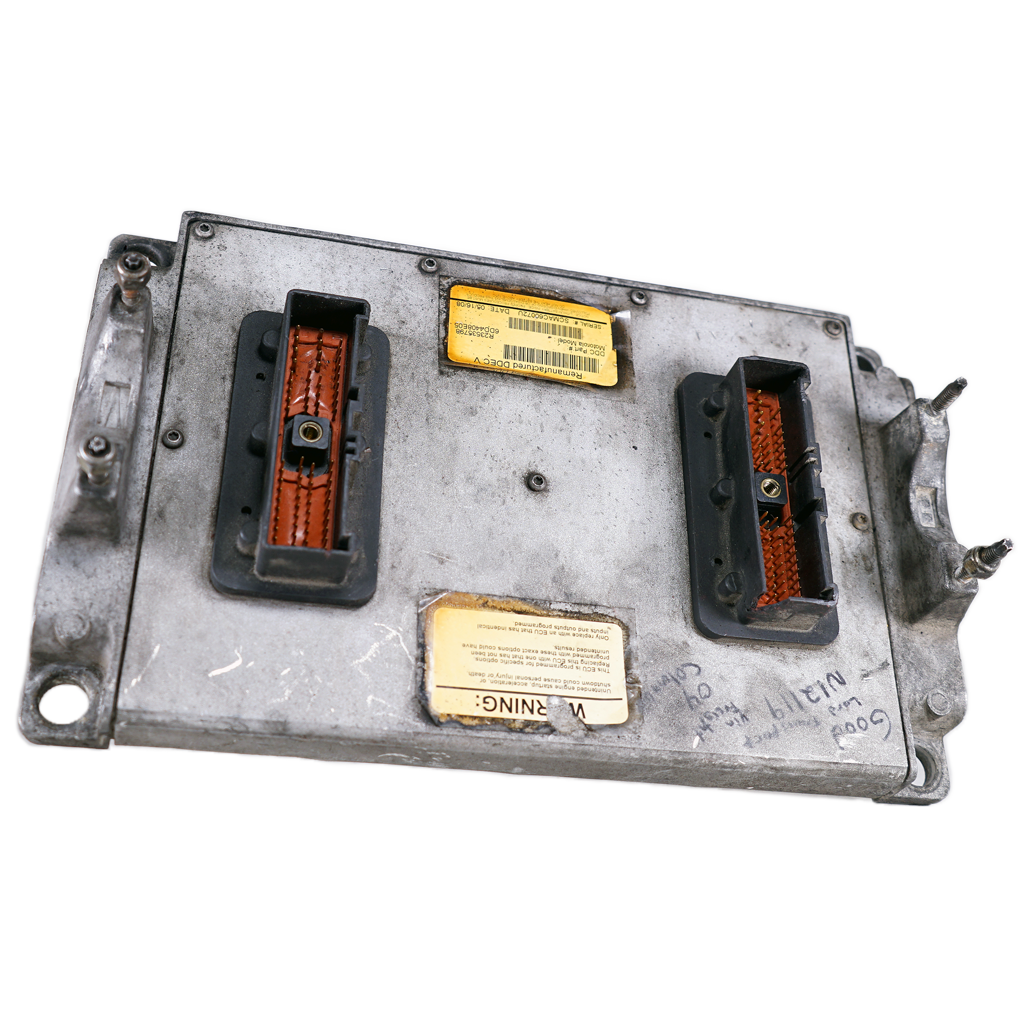
Detroit Diesel ECM Failure Symptoms and Repair Options
Detroit Diesel engines are widely used in heavy-duty trucks and commercial vehicles. The Engine Control Module (ECM) is a critical part of the engine management system, controlling and monitoring many functions required for proper engine operation.
When a Detroit Diesel ECM develops an internal electronic fault, the engine may experience starting problems, communication failures, intermittent operation, or other electrical symptoms. However, these problems do not automatically confirm that the ECM itself is defective. Wiring, connectors, power and ground circuits, sensors, communication networks, and other vehicle components should also be checked during diagnosis.
Common Detroit Diesel ECM Failure Symptoms
Depending on the type of electronic failure and engine application, possible symptoms may include:
- Engine cranks but does not start
- No communication with diagnostic equipment
- Intermittent starting problems
- Unexpected engine shutdown or stalling
- Injector or output circuit problems
- Sensor reference voltage problems
- Multiple or unusual diagnostic fault codes
- Communication problems with other vehicle modules
- Problems that appear or disappear with temperature or vibration
Many of these symptoms can also result from problems outside the ECM. Proper diagnosis is important before replacing or sending the controller for repair.
No Communication With the Detroit Diesel ECM
Loss of communication is one reason an ECM may be suspected of failure. Diagnostic equipment may be unable to establish communication with the controller, or other vehicle modules may report communication-related faults.
An internal ECM problem can cause a no-communication condition, but technicians should first verify power supplies, grounds, fuses, connectors, wiring, and vehicle communication circuits.
Crank but No-Start Problems
A Detroit Diesel engine that cranks normally but does not start can have several possible causes. In some cases, an electronic ECM failure may prevent proper control of engine functions required for starting.
However, fuel delivery, sensors, wiring, power and ground circuits, communication problems, and mechanical conditions should also be considered before determining that the ECM is faulty.
Injector and Output Circuit Problems
The ECM contains electronic driver circuits used to control various engine functions. A damaged internal driver or related circuit may cause one or more outputs to operate incorrectly.
When an injector or another ECM-controlled circuit is not functioning properly, both the external wiring and components should be checked. A short circuit or damaged component outside the ECM can sometimes contribute to internal controller damage.
Sensor and Reference Voltage Problems
Engine sensors may use regulated reference voltages supplied by the ECM. A missing or abnormal reference voltage can affect several sensors and may result in multiple diagnostic fault codes.
An internal ECM fault is one possible cause, but damaged wiring or a shorted sensor can produce similar symptoms. External circuits should therefore be tested before the ECM is considered defective.
Intermittent and Heat-Related ECM Problems
Some electronic faults occur only under certain operating conditions. An ECM may function correctly when cold and develop problems after reaching a higher temperature. Vibration can also affect damaged components or circuit board connections.
These intermittent problems can be difficult to diagnose because the ECM may operate normally again after the truck is turned off or the module cools down.
Detroit Diesel DDEC ECM Systems
Detroit Diesel has used several generations of electronic engine control systems commonly associated with the DDEC family. ECM design, connectors, electronics, and vehicle applications can vary between generations.
For this reason, the ECM part number, engine information, truck year, and symptoms are important when requesting testing or repair information. The exact module should be identified before determining available repair options.
What Can Cause a Detroit Diesel ECM to Fail?
Heavy-duty truck electronics operate in demanding environments. Excessive heat, vibration, moisture, corrosion, electrical shorts, unstable voltage, damaged wiring, and aging electronic components can contribute to ECM problems.
If an external electrical problem contributed to the original failure, that condition should be corrected before a repaired or replacement ECM is installed.
Can a Detroit Diesel ECM Be Repaired?
Many electronic ECM faults may be repairable depending on the type and extent of the damage. Electronic testing can help identify problems involving internal power supplies, communication circuits, output drivers, damaged components, circuit board connections, and other hardware-related faults.
Not every damaged ECM can be repaired. The individual module must be evaluated before determining whether a repair is possible.
Repairing the Original ECM vs. Replacement
When repair is possible, keeping the original ECM can be an alternative to installing a replacement or used controller. The original module is already associated with the vehicle's existing application, while replacement modules may involve additional compatibility or configuration considerations.
The best option depends on the condition of the original ECM and the type of failure identified.
Information to Provide for Detroit Diesel ECM Testing
When contacting an ECM repair facility, providing detailed information can help identify the module and understand the reported problem. Useful information includes:
- Truck year, make, and model
- Detroit Diesel engine model
- ECM part number
- Description of the symptoms
- Diagnostic fault codes, if available
- Whether communication with the ECM is possible
- Whether the problem is constant or intermittent
- Whether the symptoms change when the engine or ECM becomes warm
Detroit Diesel ECM Testing and Repair
MetxTech provides professional electronic testing and repair services for Detroit Diesel ECMs used in heavy-duty truck applications.
Before sending an ECM for testing or repair, appropriate vehicle diagnostics should be performed to verify power, grounds, wiring, connectors, sensors, and communication circuits. This helps reduce unnecessary ECM repair when the actual problem is elsewhere in the vehicle.
Contact MetxTech About Your Detroit Diesel ECM
If your Detroit Diesel ECM has been diagnosed or is suspected of having an electronic problem, contact MetxTech with the ECM part number, engine and truck information, diagnostic fault codes, and a description of the symptoms.
MetxTech can provide information about available testing and repair options for your specific Detroit Diesel ECM.
💬 Comments (0)
No comments yet. Be the first to comment!
✍️ Leave a Comment